The Party's for Family
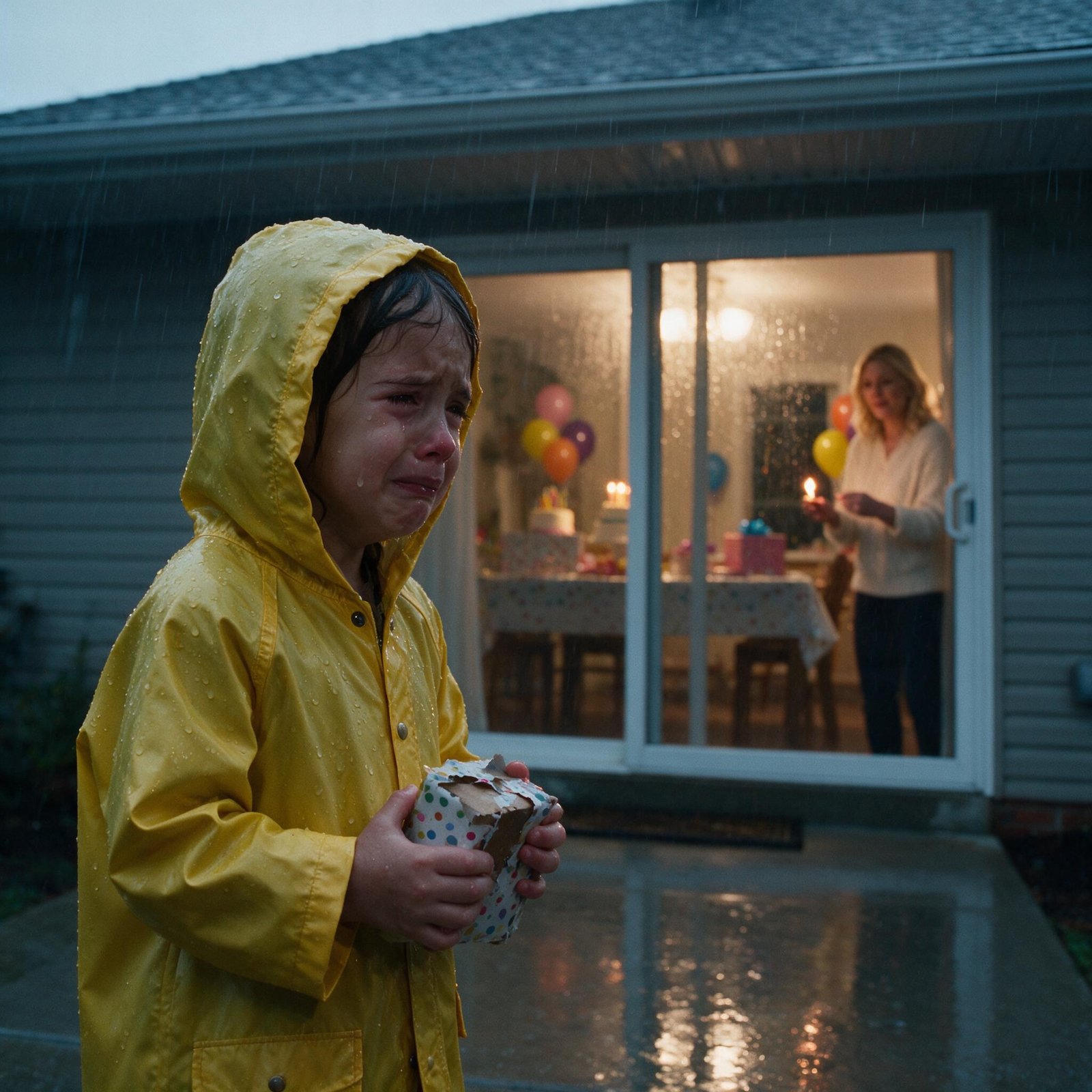
Owen Hale came off a night shift and a double that ran into it, and got home at three minutes past four on a Friday afternoon.
It had been raining since morning, the flat gray rain that comes in October and does not stop for anything, and he had been awake for twenty-six hours.
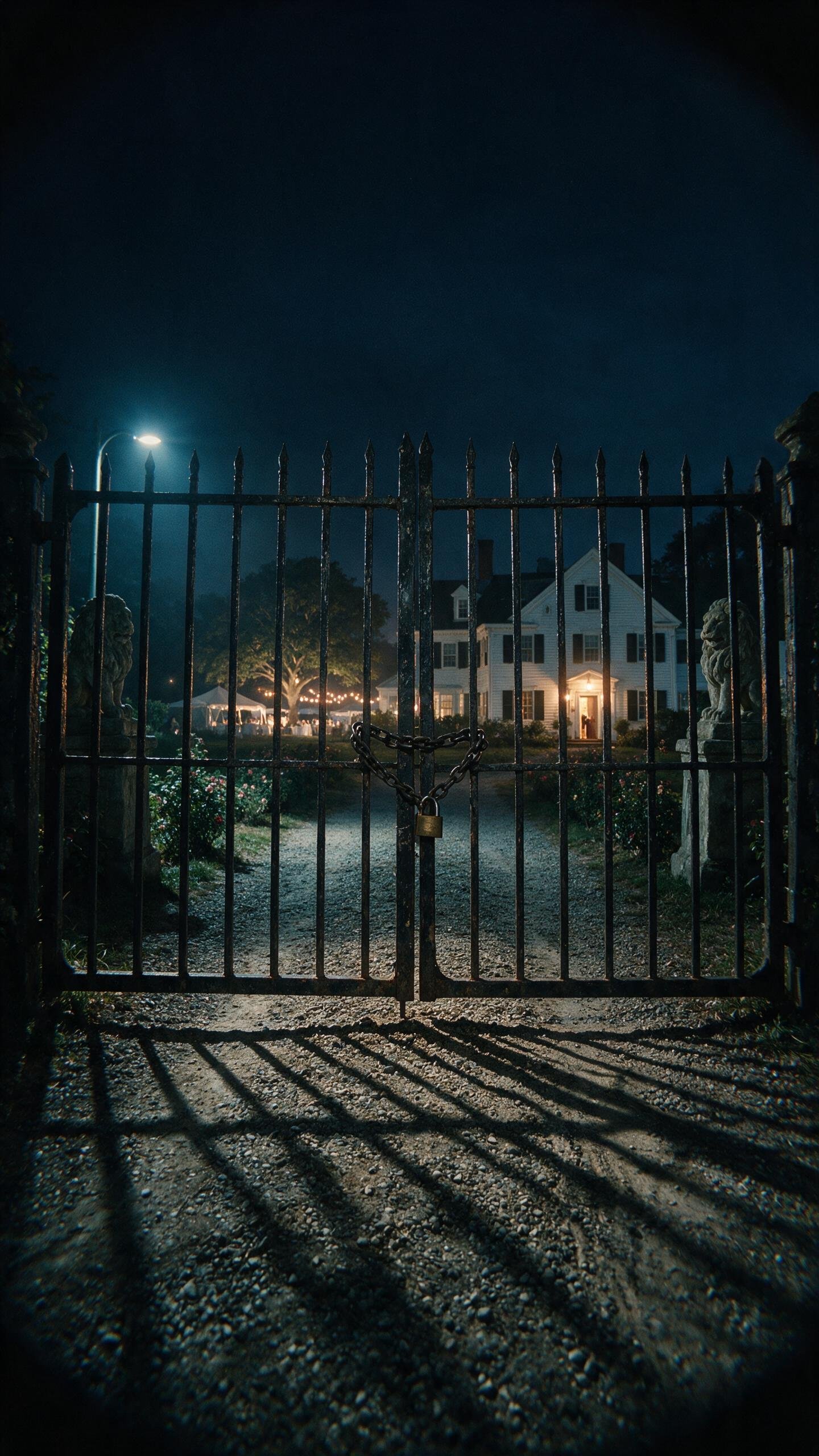
He parked at the curb because there were four cars in his own driveway.
That should have been the first thing.
The second thing was the sound — music, and children, and the particular pitch of a room full of five-year-olds.
He came around the side of the house because the side gate was closer, and that is how he saw the back patio before he saw the front door.
His daughter was standing on it.
Sadie was six years old.
She was wearing the thin yellow raincoat that was too small for her now, and pink rain boots, and her hair was flattened black against her forehead.
She was facing the sliding glass door.
On the other side of that glass was his kitchen, lit up gold: balloons tied to the chairs, a cake on the island with candles in it, his wife's son Cody up on a stool in a paper hat.
And on this side of the glass, in the rain, was his daughter, holding a birthday present she had wrapped herself.
The paper had gone soft. One corner had peeled all the way open.
Owen stood there for a second and a half and could not make the two halves of the picture fit together.
Then Whitney appeared on the other side of the door.
She had a candle lighter in one hand. Her sweater was cream-colored and perfectly dry.
She did not open the door.
She said it through the glass, in her ordinary voice, the voice she used for the grocery list.
"The party's for family."
Something came up out of Owen's chest that he had not known was in there.
"That's my daughter out there!"
He was already moving. He heard his own voice tear on the last word and he did not care.
He went down onto his knees on the wet concrete and pulled Sadie against him, and the cold coming off her went straight through his jacket into his skin.
She was shaking so hard her teeth were going.
"I've been out here since three," she said.
Three.
He looked at his watch and his hands were not steady.
An hour and twenty minutes. Forty-one degrees. Six years old.
Behind him the door slid open and his wife stood in the warm doorway, out of the rain, still holding the lighter.
"She wasn't invited," Whitney said.
Owen stood up.
He would go over the next two seconds for the rest of his life, and he would never once be able to say that he decided.
"You left a six-year-old in the rain!"
The sound of it went across the yard.
Whitney's head turned with the blow and her hair came loose across her face, and inside the kitchen a child's voice asked what that noise was and somebody turned the music up.
She straightened.
She put one palm flat against her own cheek, and when she looked at him there were no tears in her eyes at all, only something cool and busy, like a woman doing arithmetic.
"She needs to learn her place," Whitney said.
Then she stepped back into the kitchen and slid the door shut and went to light the candles.
Owen picked his daughter up.
She weighed nothing. She put her face into his neck and her arms around him and she did not let go of the present.
He carried her around the side of the house to the truck, and he put the heater on full, and he sat with her wrapped in his jacket while the windows fogged.
He was going to say something. He had a whole speech coming.
But Sadie got there first, in a small flat voice, into his shoulder, the way children say things they have already decided are just true.
"She does this every time you work nights."